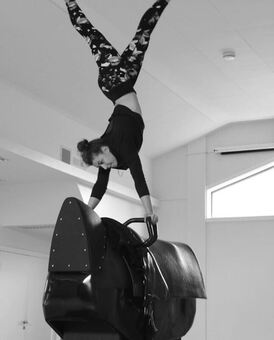
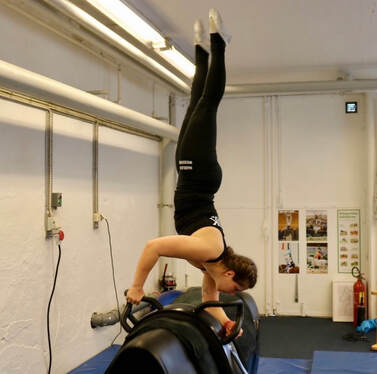
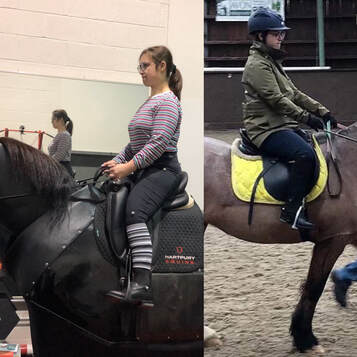
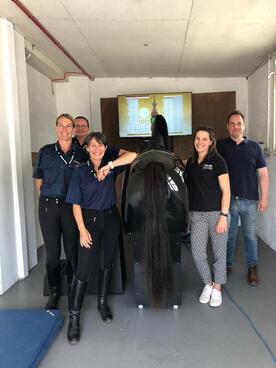
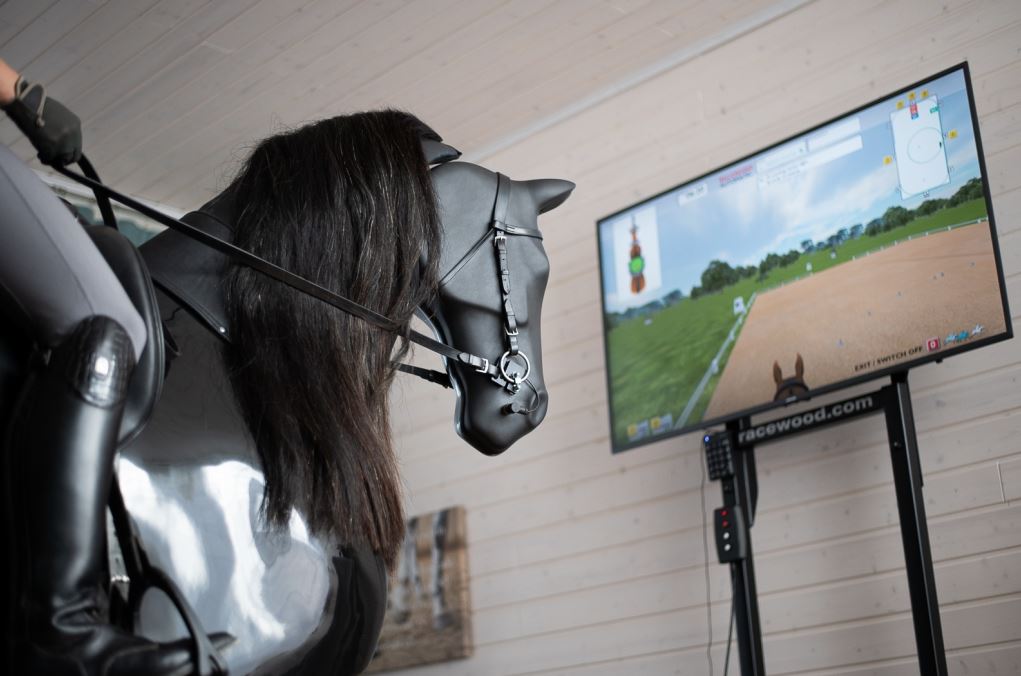
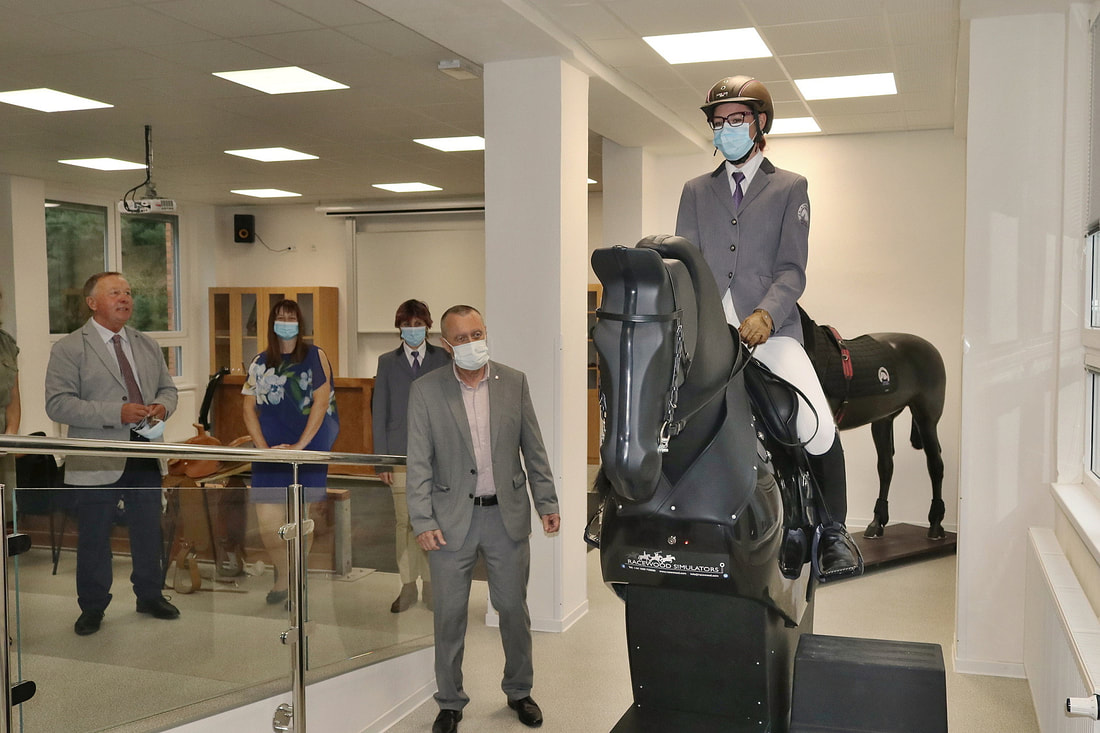
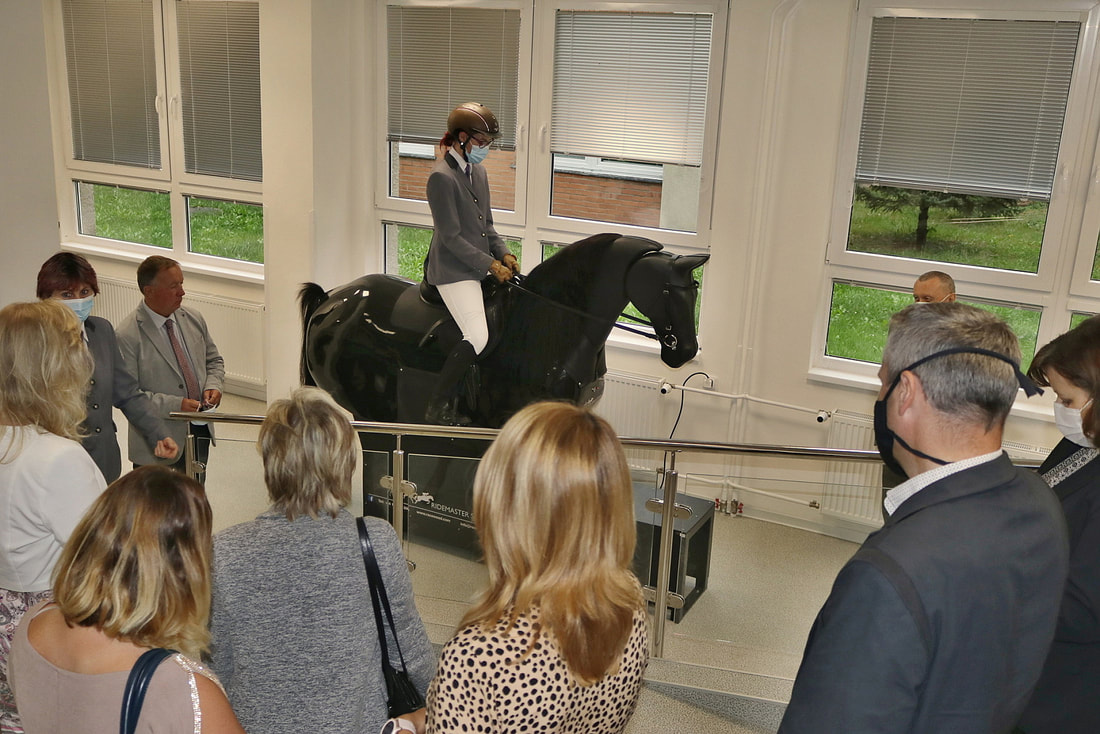
Since his arrival in 2015, Winston the Racewood Simulator has been helping young people with disabilities to enjoy the emotional, therapeutic and physical benefits of horse riding in a safe and fun way. Find out more about the In Focus group here. Happy 10th Birthday Winston!
|
Guest post by Jen Symms (Pegasus Physiotherapy) Sometimes the best insights come from the people who use our simulators every day. Hearing real-world perspectives helps us see to uncover new ideas too. Jen's guest blog brings exactly that: an outside viewpoint that adds depth, honesty and a unique take on our software - in particular, she talks about how our saddle sensors capture data on the rider's position in the saddle - and what this should or should not look like.
Saddle sensors, as seen on the Racewood interactive simulators, are a brilliant way of making the invisible visible. They show how a rider’s weight moves across the saddle (and more importantly on the horse’s back), giving us objective data about seat, symmetry, and balance. But it’s important to remember that there are two parts to the picture: Static balance – where the red dot sits when the rider is at rest. Is it central? Is it aligned with the 12–6 line? This gives us an initial idea of symmetry and posture. Dynamic balance – what the rider does when the horse moves. This is far more important. Do they follow the gait rhythm? Is their weight equal left to right? Or are they achieving “balance” asymmetrically through gripping, twisting, or dropping one side? You can have a perfect, smooth curve on the screen, but when you actually watch the rider, you may see they are making many micro-adjustments to create that pattern. More experienced riders understand that they need to move with the horse and will use subtle shifts and strategies to keep equal weight on both seat bones. That’s why sensor data should always be combined with observation: the trace shows what, but only watching the rider reveals how. Static vs. dynamic balance The red dot (a feature of the software that shows the rider's position in the saddle) at halt is more useful than many riders and coaches realise. A stationary red dot shows whether the rider is sitting centrally, but it also reveals how well they can stabilise the pelvis while isolating other body parts. - Can they apply a leg aid without tipping forward or shifting to one side? - Can they rotate or adjust the pelvis without the dot drifting? - Can they sit with and without reins while keeping the dot in the same position? If a rider cannot control the red dot when static, they will almost certainly struggle once the pelvis also has to move dynamically with the horse. At halt, the red dot is especially valuable for helping a rider understand how their pelvic movements affect the horse’s back and balance. It allows us to quantify how well they can tilt forward/back, side to side, or rotate symmetrically. This is particularly important on simulators, where riders often struggle to “ride” the mechanical horse in the same way they would a real one. The simulator requires precise aids- pressing the correct sensor “buttons” or shifting weight just enough- to trigger a leg yield, for example. On a real horse, the rider might get away with less accuracy because the horse interprets their intent. The simulator is not so forgiving; it demands precision. That makes it an excellent tool for testing whether riders can stabilise and isolate movements before adding motion. Once the horse (or simulator) moves, the question becomes: can the rider still keep balance equal while following the gait? Or does their red dot creep forward, sideways, or jaggedly as the horse moves and they start to add in aids? Rider movement is necessary to look still Each gait has its own unique pattern of weight shift, and skilled riders adapt their pelvis to match. Walk At walk, the horse’s back and ribcage roll side to side, while the hindlimbs also push the rider’s pelvis gently forward. On sensors, this creates a lateral left–right pattern, with a forward–back element that produces the classic figure of 8 or infinity sign. On simulators, where propulsion is absent, the side-to-side is exaggerated. Trot At trot, because diagonals strike together, there is less side-to-side roll. The trace is smaller but still rhythmical. Rising trot produces clear unloading and reloading phases; sitting trot shows steadier oscillations. Sensors are particularly useful here to show how well the rider reloads the saddle in the sitting phase rather than “hovering” or slamming back down. Canter In canter, weight stays more central, matching the rolling three-beat rhythm. But the pelvis still needs to follow each hindlimb’s thrust. If a rider struggles more on one rein than the other, canter on the simulator often highlights the biggest asymmetries, with the red dot drifting most noticeably. Research shows experienced riders often control this forward movement of the horse in all gaits with a slight backward tilt of the pelvis, while novices tend to be pushed into a forward tilt- so assessing the vertical movement of the red dot can also be really helpful in assessing forward and back movement in different gaits. Light seat and rising trot Saddle sensors also give valuable insights outside of sitting work. Light seat: Here, the rider deliberately takes weight off the back of the saddle into the stirrups. The red dot should move closer to the stirrup bars - this is correct. But if the rider is unbalanced, the dot often creeps too far forward. This helps coaches assess whether the rider is tipping forward, bracing in the stirrups, or struggling to stabilise through the core. Used with mirrors, this feedback can build a more secure light seat. Rising trot: The trace shows whether the rider reloads the saddle smoothly in the sitting phase. Skilled riders lower with control, producing a consistent, even pressure peak. Novices often hover above the saddle or drop heavily back in, which shows clearly on the trace. Why a still red dot is not the goal If the red dot hardly moves, it usually means the rider is gripping or bracing to “stay still.” This creates stiffness in the rider and blocks the horse’s back. Research confirms that elite riders show smooth, rhythmical pressure changes that match the gait, while novices produce jagged, erratic, or overly flat traces. The goal is not to freeze the pelvis, but to develop dynamic balance: equal weight left and right, stride by stride. What the red dot can (and can’t) tell us Saddle sensors provide data, but they don’t tell the whole story. A smooth curve may suggest good following, but might mask excessive micro-adjustments. A jagged line or uneven peaks point to asymmetry, stiffness, or lack of control. A consistently off-centre dot may indicate crookedness, mobility restriction, or saddle fit issues. Front–back placement varies with build and saddle, but ideally should remain close to the middle or the 12–6 line. Too far forward = ahead of the horse’s centre of gravity; too far back = loading a weaker region of the spine. Where the red dot sits vertically will depend on the saddle design, the rider’s body weight and proportions, and how weight is distributed in the saddle. So if the dot is not perfectly in the bullseye, that is not necessarily wrong- the key is that the rider is sitting centrally and in good alignment. This is why the rider must always be observed alongside the trace. The sensors show what is happening, but the coach determines why. Novice vs. expert riders Studies on both horses and simulators show clear differences between novice and expert riders: Novices often aim for stillness, resulting in stiffness, blocking, or jagged pressure patterns. Some try to pre-empt the horse’s movement rather than following it. Experts accept movement and adapt stride by stride, producing smooth, symmetrical traces. Simulator studies show that experienced riders display more refined trunk–pelvis coordination strategies, while novices rely on unstable or stiff movement patterns. Auto-training and progress tracking One of the great benefits of saddle sensors is their role in the software's auto-training program. Riders can use them to track progress over time: Is the red dot more centred after weeks of practice? Are left–right oscillations becoming more equal? Is rising trot seat loading more controlled? Is light seat balance more consistent without creeping forward? This allows riders to train with feedback between lessons. The key is interpretation: the data is a guide, but the coach helps make sense of it and links it back to rider biomechanics etc. Why this matters If a rider cannot follow the horse’s basic movement at walk and trot, they will struggle to apply deliberate, precise weight aids in more advanced work. Saddle sensors provide clear, objective feedback to highlight these fundamentals, helping both rider and coach understand what is really happening. The message is simple: don’t chase a motionless red dot. Use the data to build awareness, refine coordination, and track progress. True harmony looks like fluid, symmetrical, gait-matched movement- not stillness. Pegasus Physiotherapy. References Byström, A., et al. (2009). Kinematics of saddle and rider in collected and extended trot. Equine Veterinary Journal. Byström, A., et al. (2015). Influence of rider on horse locomotion. Acta Veterinaria Scandinavica. Byström, A., et al. (2019). Horse–rider interaction in passage. Comparative Exercise Physiology. Clark, A., et al. (2022). Experienced vs. novice riders on a riding simulator: trunk kinematics and saddle forces in rising trot. Comparative Exercise Physiology. De Cocq, P., et al. (2009). Vertical forces on the horse’s back in sitting and rising trot. Equine Veterinary Journal. Lagarde, J., et al. (2005). Coordination dynamics of the horse–rider system. Journal of Motor Behavior. MacKechnie-Guire, R. (Centaur Biomechanics). Research on rider asymmetry, saddle pressure, and horse locomotion. Peham, C., et al. (2010). Forces acting on the horse’s back and rider seat in different trot positions. Equine Veterinary Journal. Uldahl, M., et al. (2021). Off-horse pelvic mobility relates to riding harmony. Journal of Equine Veterinary Science. Wilkins, R., et al. (2020). Static pelvic posture vs. dynamic pelvic tilt in riding simulators. Journal of Equine Veterinary Science. Wilkins, R., et al. (2022). Trunk–pelvis movement strategies on a riding simulator. Comparative Exercise Physiology. Rehabilitation isn’t just about healing the body, it’s about rebuilding confidence, overcoming mental barriers and giving riders the feedback they need to return to the saddle stronger than before. Some physiotherapists are turning to our simulators as a powerful addition to their toolkit. Our technology is showing what might otherwise have been missed and helping riders feel what they need to feel before stepping back into the arena. Jen was our guest on our most recent Webinar. She talked us through how and why she uses a Racewood Simulator for rider assessments and consultations. "I rarely see riders on horses initially anymore. The simulator gives me the objective data I need from the sensors - not just what I think I see." Traditionally, physios rely on observation and manual testing. Valuable, but possibly subjective. Our simulators change this by offering real-time data. Physiotherapists can: Track movement quality and consistency Spot compensations that riders and coaches might not pick up at first See how fatigue impacts form Measure progress across sessions Compare pre- and post-injury outputs This level of insight allows Jen to make more confident decisions, adjust programming faster and giving her riders visual proof of their progress - something that can significantly impact motivation and trust in the process. "Sometimes it starts in the mind" Even when the body is capable, the mind can hold an rider back. For riders recovering from injury, small wins aren't "small" at all. They're what keep you moving forward. When you see a pathway to improvement, rather than simply feeling disheartened by not being able to do something it has a profound phycological impact; a huge part of getting back into the saddle. Inside the simulator, physios can create scenarios that: Replicate specific situations Challenge problem movements Create controlled exposure to feared actions Build confidence step by step Because the simulator is safe, predictable and adaptable, riders can attempt movements they might avoid on a real horse. When they succeed, the mental barriers begin to fall away. "Horse Riding is unlike any other sport" Most people are expected to just get on without learning balance, posture or coordination first. By focusing on controlled, foundational work first, apart from removing strain form the horse, I can - Improve long-term outcomes Make the return-to-saddle phase faster and safer Reduce fear and hesitation Give riders objective proof they’re ready The basics aren’t just the first step, they are the step that determines the success of every stage that comes after. Our simulators are empowering rider-physios. By combining clinical expertise with precise data, immersive environments and controlled progression, physios like Jen can deliver more effective, holistic rehab experiences. At every stage, from early movement, confidence building, mental resilience, accountability and return-to-the-saddle, the Racewood Simulators are helping riders get back to sport safer, stronger and sooner. Why not check out what Jen offers here and find out about pricing and lead times for our different models here. Last week, our team hosted a live webinar to answer some of the most common questions we receive from people considering an investment in a Racewood Simulator. During the session, we explored the three core principles behind our simulators - accessibility, technique, and welfare—and shared examples of how they’re being used across a variety of settings, including educational institutions, independent businesses, equestrian centres, and rehabilitation or therapeutic environments. Here’s a round-up of the key questions asked by our guests: Q. Can the simulators be mobile?
Our simulators are designed to be installed directly to the floor for stability. However, if you plan to take your simulator to an event, we can supply a stabilising bar for certain models as a temporary solution. Some customers have also successfully installed simulators into mobile trailers, though this isn’t something we manage ourselves. If this is of interest, we’re happy to provide guidance and recommendations before you get started. Q. What is the recommended run time for the simulators? Our simulators are built for continuous use, offering safe and effective training all day long. The core benefit is that they reduce strain on real horses, making extended training sessions possible without compromise. Q. Can one simulator cover all disciplines? Not exactly. Different disciplines require different designs and mechanisms, which is why we offer a range of models—Racing, Vaulting, Polo, Trot Racing, and General Riding. Our most versatile option is the Eventing Simulator, which supports a wide variety of disciplines including basic arena work, Grand Prix Dressage, Show Jumping, and Cross Country. It also includes different programs to suit varying levels of ability. Q. What is the potential ROI?This depends on your industry, location, and personal expertise. Many of our customers charge anywhere between £40–£150 per hour for coaching sessions, and because the simulators can operate all day, the potential for revenue is significant. We typically recommend charging at least £1 per minute. Some customers even hire their simulators to external coaches, though we suggest ensuring those coaches are Racewood-accredited beforehand. It’s also worth noting that riders are willing to travel for quality simulator coaching. We’ve even known clients to take transatlantic flights to work with specialist coaches on our simulators—proof of the demand and opportunity available. Q. What business support do you provide and do you offer financing? While we don’t offer formal business plans, we can supply case studies, testimonials, and supporting materials to help with your proposals. We don’t provide financing directly—given our international customer base—but we can share details of independent financing companies (though we have no affiliation and recommend conducting your own due diligence). On the support side, we’re always happy to help. We can list your business on our website with a backlink and provide exposure through our social media channels. And of course, we’re here to answer any questions you may have. Q. What should the room set up look like? Our simulators have been installed in a wide variety of environments—classrooms, barns, museums, shops, and more. The main factors to consider are:
If you would like to be on our email list for the next webinar, or you'd find a one-to-one call helpful please just let us know and we'll make it happen! DROP UP AS EMAIL HERE. "The simulator played a critical role in my rehabilitation" A Case study: Morten Williams, RDA Coach8/30/2024 Morten Williams is an RDA coach who, having recently undergone his own rehabilitation journey, knows first hand the best practises on the simulator. He took the time to tell us a little more about his own recovery and how he helps others.
Q1. How did you get into RDA coaching? My background has always been equine orientated; I’m a freelance equine groom and Riding for Disabled Group coach who’s absolutely passionate about equitation, the countryside, farming, the great outdoors and I’m at my happiest when I’m out and about in the countryside in a pair of wellies. I’ve worked for a wide range of riding schools, livery yards, equine welfare centres and Riding for the Disabled organisations. Q2. When did you first start coaching with the simulators? Who is your typical client? I started coaching with the simulator when I joined a Riding for the Disabled Centre. Once I embarked on the Coaching Pathway and became an RDA coach, I was trained in how to use the riding simulator. My typical riders for the simulator (being a Riding for the Disabled yard) are those with a wide-ranging mix of abilities, from different backgrounds and all walks of life. The mechanical horse provides a safe, controlled and stable experience for them. It is so much easier when it comes to mounting and dismounting. The combination of the simulator and it’s RDA software provides an excellent, all-round interactive experience. Q.3 What do you personally like about coaching on a simulator? The fact you can stand next to the rider and walk around whilst they are riding and really see the biomechanics at play; something you can’t do if coaching in a school. When fettling the rider’s position, you can see the adjustments in real-time on the display using all the sensors the simulator has, which is also another great training aid. Q4. You recently suffered and injury yourself, can you tell us a bit about that and how you approach your own rehabilitation on the simulator? 12 years ago a had a riding accident, which subsequently damaged my medial patellofemoral ligament (MPFL). A few years ago, whilst at work, my MPFL ligament fully ripped in half. The results of which made the patella highly unstable was liable to frequent patellar subluxations and dislocations. This year in May, I underwent medial patellofemoral ligament (MPFL) reconstruction surgery to correct the injury. My approach to my rehabilitation on the simulator is “a little and often”. Smaller yet repetitive stages are far better than longer, infrequent sessions. The simulator has played a critical role in my rehabilitation and from the first session I could tell what a different the operation had made to my knee. Physio (whilst extremely important) was not showing huge amounts of tangible progress, yet sitting in the saddle of the simulator I could see straight away that there was a drastic improvement. Rising trot and sitting trot without stirrups is the perfect way to build up the muscle tone and strength that I had lost pre and post op - the simulator is a safer way of rehabilitation for me than the unpredictability of a real horse. Thanks Morten - good luck with the rest of your recovery! If you would like to find an RDA group in your area who offer simulator coaching, take a look at our customer list on the website, or drop us an email [email protected] Lucy McWilliam has been a customer of Racewood since 2008, when she purchased her first Riding Simulator. This year, with the support and encouragement of one of her clients, she was able to upgrade to a fully interactive Dressage Simulator. We chatted to Lucy about being a riding coach, incorporating the simulator into her methods and why it wasn't always plain sailing...
Q1. What drove you to begin training with a simulator? What was it you felt you could do to make a difference? I first came across the Simulators when a yard I had worked at approached me and asked if I would like to use ‘Frank’ to teach the more novice clients. Frank was one of the older models with a wooden head. I worked very closely with a client who was recovering from major surgery and her physio had suggested she try riding. Looking for a safe alternative she looked at the simulators. The changes I was able to make to not only her position/ mobility but also her confidence were amazing. She was very persistent that I should invest of a simulator of my own. Having worked with horses since I left school I was becoming disheartened with the equine industry and I saw the simulator as a chance to be able to make a real change to how people approached riding. The simulators allowed an element of proof that real horses don’t. In other words they aren’t as forgiving as a real horse. The rider has a real chance to see what it is they are actually asking from the horse. From here it is possible to break down many of the more traditional ways of teaching riding in a way that means people can understand whats being asked of them, why and what that means to a horse. I made a deal with my client that if she rode a real horse again I would take the plunge and buy my first simulator. Barney arrived in 2008. Q.2 What challenges did you face at first, and how did you overcome them? It wasn’t all plan sailing, whilst I and clients that I have worked with could see the benefits of the simulator there was still a lack of understanding about what the benefits were and why you would use one. I faced criticism mostly from other instructors who failed to see how I could know how someone rode without ever seeing them on a real horse. I approached a big organisation to get their approval but they said they didn’t recognise the simulators. Funnily enough they use them themselves now. I took Barney to Your Horse Live and didn’t switch him off both of the days we were there so I knew the demand was there. In fact in my experience the people who speak negatively about the simulators have mostly never even been on one. Gradually and with amazing support from my clients I began to build a reputation and haven’t looked back since. Q.3 What sets your business/offering apart from others? My business is about nurturing the relationship between horse and rider and making it possible for anyone to have a go. For me when a client comes in it’s not just about what they look like but how they absorb the movement, How someone reacts to an instruction, the relationship with their horse and how we can bring all this together to create a theory of riding that works for them and their horse. I’m not try to teach my style of riding rather raising awareness of what a client is doing in the saddle, the effect this has on the horse and creating a tool kit they can use when riding alone. The simulator is a perfect partner for this allowing mistakes without judgement and building confidence through understanding. I wouldn’t say I specialise in anything in particular other than loving horses and understanding how much really goes into just riding. Q.4 Can you tell us a little more about how and why you upgraded your model? 2024 and Roo arrives. I sold Barney and was going to have a break but on my break I realised I missed it too much. I started using Llyod a simulator at a yard local to me. Once again after much encouragement from clients I upgraded to Roo the dressage simulator. It’s been interesting using a simulator with a screen this time around having never had one with Barney. It takes me back to the feeling that the simulators provide the element of proof only this time not only is the simulator helping to protect the horse but it also protects me as an instructor. The simulators are incredible but what they can’t do is tell you how to fix it. That’s my job and sometimes hearing that you may be the problem or that you aren’t as straight as you thought can be tricky for riders to accept. The simulator becomes a different horse many times in one lesson with the data on the screen reflecting the changes I am making . It allows me as an instructor to raise a riders awareness of what they, not me or their horse is actually doing. Roo has been a great new addition but Barney will always hold a place in my heart 😄 Q5. What can riders typically expect from a session with you? I always find it hard to say what you can expect when visiting me and Roo. It’s so different for everyone. I teach what’s in front of me in that moment in time. Very similar to how a horse responds to the rider. Q6. Can you describe your current set up? How often are you teaching and what sort of clients are you seeing? I’m currently at Wymondham Windmill which is a lovely site. We have a variety of shops a great tea room. It’s easy to come for your lesson and then spend the morning pottering around. I currently work 5 days a week fitting teaching in around my son’s school hours and a full day on the weekend. I teach a huge variety of riders. Dressage riders, eventers, dressage judges. Happy hackers, people using it for rehabing and people just wanting to be better riders for their horses. The variety suits me I believe anyone from any background should be able to access riding and feel welcomed and comfortable when doing it. Thanks Lucy!! If you would like to book in with Lucy, you can track her down via her website. If you would like to discuss purchasing your own simulator, get in touch at [email protected] What is Vranch House?
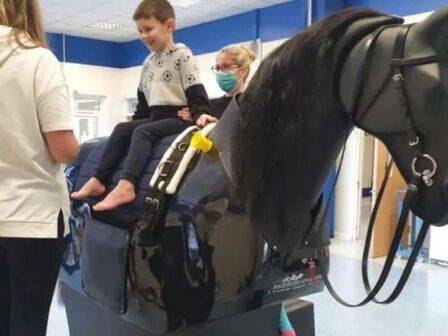
Vranch House is a school and therapy centre in Exeter that supports children between the ages of 0-19 with a wide range of moderate to severe physical disabilities, or who may have a combination of additional needs, including complex medical needs and multisensory (visual and/or hearing) impairments. Whilst we have some more-cognitively able pupils, most of our pupils experience specific or global learning needs and others have profound and multiple learning difficulties (PMLD). The majority of the children accessing our services require support with core/upper/lower limb strength, head control, sitting/standing balance, co-ordination, low tone, increased muscle spasticity, communication and participation in activities of daily. A holistic approach to children's therapies Vranch House offers a holistic approach to therapy and we are passionate about offering alternative methods to make it fun, exciting and unique for the children who attend. One method we were keen to offer was Hippotherapy (which comes from the Ancient Greek words meaning "Horse"/Hippos and "treatment" /therapy.) Hippotherapy utilises the natural movement of the horse during its walk phase of gait, which provides a rhythmic, repetitive and three-dimensional movement through a dynamic base of support and has been suggested to replicate the therapeutic movement of walking on the human pelvis. Incorporating a Horse Simulator Access to riding centres and facilities within the community can be challenging for many of our children and access to a mechanical horse would enable us to provide Hippotherapy in a safe and controlled environment. In November 2021 we were very generously donated a grant from the Masonic Charitable Foundation for a Racewood mechanical Riding Simulator, to be able to provide a Hippotherapy service. The Hippotherapy service is still being developed and at present we have 35 children accessing the mechanical horse, with many more children on the waiting list for assessments to access the therapy. We have just had hoisting installed which will further increase the access for more children to enjoy Hippotherapy. Already seeing improvements Since using the mechanical horse, we have seen so many improvements in children’s balance, mobility, communication and participation in the their activities of daily living. Parents have commented on children’s improvements in their ability to;-
The most rewarding outcome for the staff and parents is seeing how much the children enjoy the sessions, laughing and smiling throughout and always asking for more! As a team our favourite thing about training with the mechanical horse has been the ability to complete the children’s therapy programme whilst seeing them work extremely hard towards their goals without realising as they are so engaged, motivated and having a lot of fun all at the same time. The mechanical horse is really hard work for our children who face challenges every day with their strength and balance and seeing the progress that has been made in a short amount of time has been really rewarding. We are very grateful to have been given the opportunity to purchase a Racewood Riding Simulator by the Masonic Charitable Foundation and we can’t wait to see what the future of Hippotherapy brings for our patients at Vranch House. If you would like to find out more about Vranch House and their Hippotherapy programme, or if you would like to discuss how a simulator could benefit your school or facility, please get in touch with a member of our team. We love to hear how our simulator ambassadors train and use our products. German Vaulting Gold Medallist, and FEI World Champion Mona Pavetic, took 5 minutes for a quick Q&A about training schedules with Team Norka and what keeps her motivated. Mona, where are you from? I am from Germany, born in Cologne. What team do you compete for? I compete for the Team Norka. How long have you been vaulting? I‘ve been vaulting now for 13 years. What is your typical training schedule? My typical trainings scheduale is that I drive to my vaulting club twice a week for my horse training. Therefore I have to prepare the horse and train on him later. To not overwork the horse I also train 2-3 times a week on the Racewood Vaulting Simulator at home. And not to forget a Vaulter has to be very fit so I also go to the gym. How do you switch off / have down time? I switch of by being by my own horses. When I am with them I have the time to relax. Or I do different sport activities like swimming or playing tennis. When is your next competition? Right now the season for this year is over for me. But after the season is another one so I have to discuss with my trainer what the next year will be like... Favourite move? I don’t really have a favourite move or skill, but I am really proud of the move that I created that looks like a bridge! Why do you train with the Racewood Simulator? When I train with the Racewood Vaulting simulator I never get bored. This is one of my favourite things about the simulator. If you can do your Programmes in perfection on the simulator, there is a high chance that you can do it also as good on the horse, because the simulator is very similar to a horse; for example, the body shape, the canter and also the weight shift is very similar to a real vaulting horse. It is also one of the best things that it is also more difficult on the simulator than on the horse in my opinion! Favourite motivational quote? "Be someone you would look up to" Favourite music to train to? Hmmm my favourite music to train to varies from time-to-time. I have different playlists and decide from day-to-day with one is the best for that day - but it's usually Pop music that you hear in the charts or radio! Thanks Mona! Best of luck training for the next season! If you would like to find out more about our Vaulting Simulator, please follow the link or drop us an email! We love seeing videos and snippets of our Vaulting Simulator ambassadors on their Simulators. Their level of fitness and strength is mind-blowing. We wanted to really find out what keeps them so motivated and what makes them tick. Vaulter Madeleine Wickstom let us pick her brains! Q. Madeleine, what country are you from? A. Sweden and Austria Q. How long have you been Vaulting? A. I did vaulting in 1997 as a child for about 1 year and started again as an adult in 2016. So in total about 7 years. Q. What is your typical training schedule? A. 2-3 days vaulting (with horse or simulator), 1 training at the gym for strength and injury prevention, 1-2 training gymnastics in an adults gymnastics group, 1 day training acro-yoga, 2-4 times a week a short shoulder prehab training and if I feel for anything else I do different sports depending on the seasons, e.g. figure skating, skiing, dancing, parkour, OCR, riding in the woods. My horse trainings are few, I do about 1-2 weekends a month as I have to travel around 4 hours to get to him. That is where the simulator has helped me a lot to overbridge this gap. Q. How do you switch off/have down time? A. I am a little bit like an on-/off-machine; I just lay down and get sleepy. Though I firmly believe that a good balance between love, food, sleep, work, exercise and fun is the most important part to be able to do that. So it’s not one single thing, for me it’s all together. And occasionally I read a book or take a hike in some of the beautiful nature in Sweden. Q. Next competition? A. Hopefully one in October in Sweden which will be the last of this year. After that we plan on organizing a simulator competition here in Sweden with the Racewood Vaulting Simulator. Q. Favourite thing about training with the Racewood Vaulting Simulator? A. It just keeps on going and going and going… Jokes aside, it just is the perfect simulator since it adjusts to weight shifts and has the perfect body shape just like a horse. For me the difference between it and my competition horse is quite small which makes the transition from taking a trick from the sim to a horse very easy. Q. Favourite motivational quote? A. "Who the hell cares about what anybody else thinks? Just look into your heart and do whatever the hell makes you happy." Dr Kelso, TV show Scrubs Thanks Madeleine! And best of luck with the upcoming competition! You can find out more about the Vaulting Simulator here, or drop us an email if you would like pricing and lead times. Customer feedback plays a fundamental role in everything we do here at Racewood. All of our products have been borne from listening to what riders want, creating it, testing it, making it better, developing it some more... and this process repeats, in order for products to advance and improve. So, hearing from riders like Disability Activist and Para Rider Winnie, not only gives us confidence that our products are playing a role in rider's rehabilitation and therapy, it motivates us to keep going with product development. Most of all however, Winnie's determination is an inspiration to us all, on a personal level. Over to you Winnie: Winnie's story "The concept of having a mechanical horse to enhance the performance of a rider and learn from is not a new one for me. However, it’s only been in recent years I’ve been able to fully appreciate the versatility of mechanical horses and the wide range of benefits they provide. I have a neurological disability called Cerebral Palsy which affects my muscles, my overall movement and co-ordination abilities. I also have Fibromyalgia which causes me additional pain and fatigue. I have had varied degrees of movement over the years – but for the most part I use a wheelchair to navigate my life. I use horse riding and also use bespoke Hippotherapy sessions to supplement ‘traditional’ physiotherapy. My first experience of a mechanical horse was at college; this mechanical horse (who was named Jeanette) had three canter paces and I would ride for about 20 minutes if not longer twice a week being taught by my LSA and improving my overall positioning in the saddle. This was vital in enabling me to see what worked well for my body and we trialled a lot of saddle swapping, stirrup length changes etc which was great as it allowed me to get to know my needs before transferring over to a live horse. I was also able to safely enhance my fine motor skills learning to plait up a mane – which made me practice my standing skills. Getting stronger Overall, I became a lot stronger in my core and my position and stamina improved immensely. My muscles began to relax into the motions after a few sessions and my legs appeared to drop and become longer – what was the cause of this? My muscles engaging to support my body movements, very similar to the way we utilise traditional physio train muscles to improve the bodies functions with structured regimes of exercises. However, what was better about this is that it was all organic and not something I had to think too hard about – Yes, I had body awareness and knew what I needed to do to achieve the result I wanted but it was something that was naturally occurring and not too consuming. I think what made it easier was the fact that me and my LSA were in constant fits of giggles over one thing or another – so much so the entire yard could hear us! My LSA also would let me give her lessons on Jeanette too – I’m not sure I was the kindest teacher forcing her to do rising canter in no stirrups. But nonetheless, cemented the foundation into the positives of mechanical horse. Hippotherapy It wasn’t until two years later post- college and a severe decline in my mobility I ventured into the world of Hippotherapy through my now physio Jo McMeechan. Jo is a physio with experience horses and specific training in Hippotherapy and EquestriSEN sessions – using the natural surrounding and play based activities to support the physical, sensory, and mental wellbeing needs of her clients to help facilitate a positive change. Jo works out of an RDA centre at present with use of a walk, trot, extended trot and canter sim which has had the settings adjusted for therapeutic purposes - but her ultimate goal is to be able to have a mechanical horse at her brand-new base of SENSTORY HQ to be able to have a central point for all her clients, this is something we are actively fundraising for to go alongside the four acres and 7 horses that currently reside and thrive at HQ. Hippotherapy is specific horseback therapy utilising the natural movement of a horse to support and change the postural control of the rider. Each session and its objective are predominantly rider-led and it’s a team effort to work towards that goal in a safe and structured environment. Typically, we don’t use a saddle or reins as a part of the overall therapy, as a whole range of different movements are used to support the development of postural and balance reactions from the head down. It’s not uncommon to see me sat facing the tail or lying on the horse while its working in a walk pace. Jo and her team of assistants are absolutely lovely and are so dedicated to their profession – which again has instilled in me a sense of accomplishment and their support has helped me with my mental wellbeing. The long term benefits The long-term benefits of using a Racewood Simulator have been amazing, I’ve gone from not being able to walk at all as a result of tremors to being strong enough to take a few steps with a walker, all because my muscles have become more engaged and working together at once to improve and support my movement. I have more stamina and can ride at a higher intensity for longer. My riding has greatly improved on a living horse and I’ve seen better reactions and more comfortable responses in the horse I am riding due to postural and positional corrections established overtime while on the simulator. I’m a great advocate for Racewood Simulators and the opportunities and results they achieve and would recommend if anyone had the chance to try one at any event – to seize the opportunity. It’s not just “sitting on an electrical horse that moves backwards and forwards”, it’s a highly valued piece of kit with a fully immersive experience into your riding abilities and allows for you in such a small amount of time to learn so much about you as a rider. Plus, if you’re lucky you might be able to trial doing Cross Country or a Dressage test!" If you would like to find out more information about our simulators, find an RDA centre near you, or get in touch with Winnie's physio Jo, please send an email to [email protected] for more information. |
Categories |